

 See My Latest Article on HelloNation
What does right-sized packaging mean?
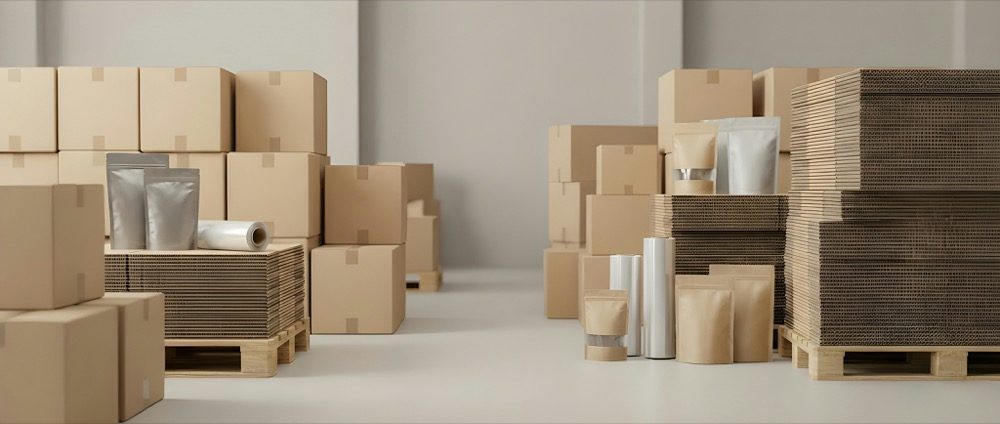
Right-sized packaging uses the smallest practical package that safely protects a product through handling, storage, and transportation. The package should provide enough clearance for cushioning, sealing, labeling, and loading without leaving large areas of unused space.
For manufacturers, this is more than a matter of appearance. Package dimensions affect freight charges, pallet utilization, warehouse capacity, material consumption, labor time, and damage rates. A box that is several inches larger than necessary can create inefficiencies at multiple points in the supply chain.
Right-sizing does not mean using the smallest possible container in every situation. A package that is too tight may increase product damage, make packing slower, or prevent consistent closure. The goal is a repeatable package design that balances protection, speed, cost, and operational reliability.
How does package size affect shipping costs?
Package dimensions can influence transportation costs even when the shipment is relatively light. Many carriers calculate charges using dimensional weight, which considers the amount of trailer, truck, or aircraft space a package occupies in relation to its actual weight.
A larger carton may therefore cost more to ship than a heavier but more compact carton. This is especially relevant for manufactured goods with low or moderate weight but substantial volume, such as assembled components, molded parts, instruments, or multi-unit kits.
Oversized packaging can also reduce pallet efficiency. If carton dimensions do not align well with pallet footprints, unused areas may appear around the load. In some cases, the cartons cannot be stacked as high or as evenly as the pallet pattern allows. That can increase the number of pallets needed for a shipment or make the load less stable.
For manufacturers shipping repeatedly, even a modest dimensional reduction can produce measurable savings over time. The effect is usually greatest on high-volume outbound lanes and products shipped in standardized carton quantities.
Why is right-sizing important for manufacturing operations?
The benefits extend beyond transportation. Proper package dimensions can improve the physical flow of materials through a facility.
A well-designed package may:
- Reduce the amount of material that operators handle
- Shorten packing and sealing cycles
- Improve carton consistency across production runs
- Make pallets easier to build and wrap
- Increase storage density in warehouses
- Reduce the number of partial cartons or mixed-size loads
- Simplify inventory control for packaging materials
In a mid-sized or enterprise manufacturing environment, packaging decisions often affect several departments. Engineering may define the product and its tolerances. Operations may manage packing labor. Procurement may purchase packaging materials. Logistics may be responsible for freight performance. A right-sized design creates a common operating advantage across these functions.
Packaging dimensions should also be reviewed alongside production volume. A carton that works well for occasional shipments may be inefficient when thousands of units move through the facility each month.
How can right-sized packaging reduce product damage?
A package with excessive empty space allows the contents to shift during handling. Movement can lead to scuffing, impact damage, broken components, or changes in product position that expose vulnerable areas.
A package that is too small creates a different risk. Products may be forced into place, closures may not hold properly, and pressure may transfer directly to sensitive surfaces. This is particularly concerning for precision-manufactured parts, finished assemblies, and products with exposed edges or controlled alignment requirements.
Effective package design uses controlled clearance. The product should remain secure without being compressed unnecessarily. Internal supports, partitions, wraps, or other protective features should hold the product in a predictable position while allowing efficient packing and unpacking.
Damage analysis is useful when reviewing an existing package. If damage occurs mainly at corners, the issue may involve stacking or compression. If products arrive scratched or displaced, excessive internal movement may be a factor. If seals fail, the package may be overloaded or exposed to handling forces beyond its design.
What role does palletization play?
Carton dimensions should be evaluated as part of the complete unit load, not as isolated containers. The most efficient carton is not always the one with the smallest internal volume. It is the one that supports a stable and space-efficient pallet pattern while protecting the product.
Important considerations include:
- How many cartons fit across and along the pallet
- Whether the stack height remains within handling limits
- Whether cartons can support the weight above them
- Whether the load remains stable during movement
- How much stretch wrap or strapping is needed
- Whether labels and handling marks remain visible
- Whether the pallet can be safely moved by common equipment
In Rochester, seasonal conditions can make load stability especially relevant. Winter moisture, temperature changes, and snow or slush around loading areas may affect corrugated materials, dock handling, and storage conditions. Packaging specifications should account for the actual distribution environment rather than assuming every shipment moves through a dry, climate-controlled system.
Can right-sized packaging support sustainability goals?
Using less packaging material can reduce waste, but environmental performance should not be judged by material reduction alone. A smaller package that causes more product damage may create a larger overall impact because the product must be repaired, replaced, or shipped again.
A practical review considers the full system:
- Amount and type of packaging material used
- Product damage and return rates
- Reuse potential
- Recyclability within the receiving market
- Transportation space consumed
- Labor and energy required for packing
- Disposal practices at customer facilities
Right-sizing can support sustainability by reducing unnecessary material and improving truck or pallet utilization. It may also reduce the amount of packaging waste generated by business customers, which is valuable for manufacturers shipping to facilities with limited storage or recycling capacity.
How should manufacturers test a new package design?
Testing should reflect actual distribution conditions. A package that performs well during a stationary inspection may fail after repeated handling, vibration, stacking, or exposure to moisture.
A practical testing program may include:
1. Measuring the product, including any features that require clearance.
2. Reviewing the most common shipping configurations and pallet patterns.
3. Building trial packages with production-intent materials.
4. Testing closure strength, stack performance, and internal movement.
5. Simulating handling, vibration, compression, and drops where appropriate.
6. Inspecting the product and package after testing.
7. Comparing labor time, material use, damage results, and freight dimensions.
Data from real shipments should be included whenever possible. Warehouse teams, carriers, receiving departments, and customer service staff may identify problems that are not visible during package development.
Testing should also consider variation. Manufacturing tolerances, different product configurations, operator technique, and changes in material suppliers can affect package performance. A package design that works only under ideal conditions is difficult to control at enterprise scale.
What common mistakes reduce shipping efficiency?
Several packaging decisions create avoidable inefficiency:
- Designing around the largest possible product variation instead of using separate package sizes when volume supports them
- Choosing cartons based only on purchase price
- Ignoring dimensional-weight charges
- Failing to review pallet patterns
- Adding excess internal material without measuring its benefit
- Using a package that requires slow manual adjustments
- Treating damage as a carrier issue without examining package design
- Changing product dimensions without updating the packaging specification
Packaging should be reviewed whenever a product changes, shipment volume increases, distribution lanes change, or damage patterns emerge. Periodic audits can reveal that a package originally selected for convenience no longer fits current production or transportation requirements.
What should a right-sizing review measure?
A useful review should combine operational and financial measures rather than focusing on carton cost alone. Manufacturers may track package dimensions, material consumption, packing time, units per pallet, freight charges, damage rates, return rates, and warehouse space.
The best design is usually the one that performs consistently across the entire shipping process. For a manufacturer serving customers throughout Rochester and beyond, right-sized packaging can help products move through production, storage, transportation, and receiving with fewer interruptions.
Efficiency comes from treating packaging as part of the logistics system—not as an afterthought added after the product is complete.