

 See My Latest Article on HelloNation
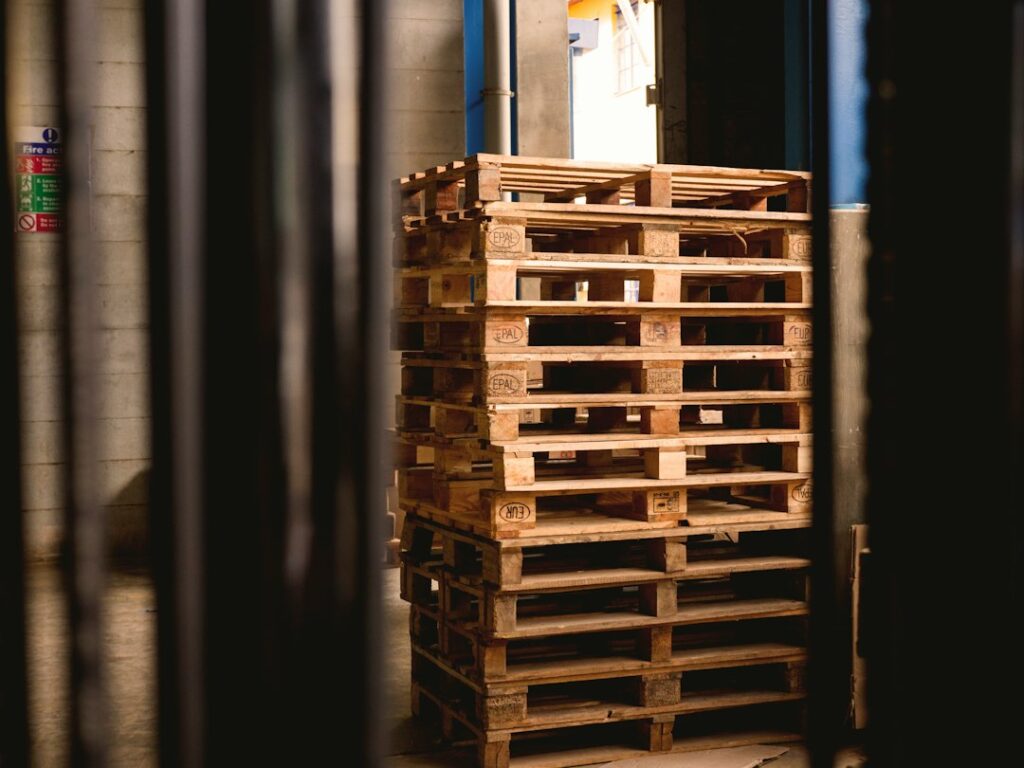
Heavy and oversized products require packaging that manages weight, movement, lifting, moisture, and handling conditions at the same time. For manufacturers, the right design is not simply a larger box; it is a coordinated system that protects the product, supports safe handling, and remains practical for storage, transport, and distribution.
What makes heavy or oversized products difficult to package?
The primary challenge is that weight and dimensions affect nearly every part of the packaging system. A large product may create concentrated pressure at a few contact points, while a heavy product can damage its container even when the outer walls appear strong enough.
Packaging designers typically evaluate:
- Product weight and weight distribution
- Overall length, width, height, and center of gravity
- Fragile surfaces, protruding components, and finished areas
- How the product will be lifted, stacked, secured, and unloaded
- Whether it will move by truck, rail, air, or multiple transportation methods
- Exposure to vibration, impact, moisture, temperature changes, and repeated handling
- Packaging dimensions required for warehouse aisles, pallets, loading equipment, and storage racks
A common misconception is that thicker material automatically creates better protection. In practice, poor weight distribution, inadequate blocking, or weak attachment points can cause failure even when the package uses heavy-duty materials.
How should the packaging design process begin?
The process should begin with the product and its likely handling path, not with a standard container size. A packaging design that works for a short internal transfer may not be suitable for a shipment traveling through several distribution points.
Start by documenting:
1. The product’s actual weight, including accessories and removable parts
2. The location of the center of gravity
3. Approved lifting points and prohibited contact areas
4. The product’s structural limitations
5. The expected transportation route and handling equipment
6. Maximum acceptable movement inside the package
7. Environmental risks during storage and shipment
Manufacturers should also identify whether the product is shipped as a complete assembly, a partially assembled unit, or a group of components. Breaking a large product into controlled modules may reduce packaging stress, improve handling, and lower the risk of damage.
For complex equipment, packaging trials should use a representative production unit whenever possible. A prototype that weighs less than the final product may not reveal problems with bottom compression, fastener pullout, or uneven loading.
Which packaging materials are suitable for large and heavy products?
Heavy products generally require a combination of structural materials rather than a single material used throughout the package. The selection depends on the product, handling method, expected moisture exposure, and required reusability.
Common structural options include:
- Corrugated containers with reinforced walls for moderate loads and controlled handling
- Heavy-duty wooden crates for high loads, irregular shapes, or demanding transport conditions
- Skids and pallets designed around the product’s center of gravity
- Corrugated partitions and engineered supports for separating components
- Molded or fabricated inserts made from rigid, non-foam materials
- Steel or composite frames for very large assemblies or repeated-use systems
The base of the package deserves special attention. It must support the product without excessive deflection and transfer weight safely to a pallet, skid, forklift, or lifting sling. A base that bends during lifting can place stress on the product even when the exterior container remains intact.
Material choices should also account for moisture. Rochester’s cold winters, freeze-thaw cycles, and wet seasonal conditions can affect wood, corrugated materials, fasteners, labels, and protective barriers. Packages stored in unheated areas or moved between warm and cold environments may require moisture-resistant construction and clear handling instructions.
How can a package keep a heavy product from shifting?
A heavy product should be restrained so that transportation forces are transferred through strong product areas rather than through delicate parts. Blocking, bracing, saddles, retainers, straps, and mechanical fasteners may be used together.
The most reliable restraint system usually includes:
- A stable base that prevents sliding
- Side-to-side blocking that limits lateral movement
- End blocking that controls forward and backward motion
- Vertical restraint when lifting or vibration could cause separation
- Protection at all points where straps, blocks, or fasteners contact the product
- A clear load path from the product to the structural base
Internal clearance should not be treated as a substitute for restraint. Empty space allows movement, and movement creates impact energy. However, restraints should not be tightened so aggressively that they distort housings, bend panels, damage finishes, or place stress on bearings and shafts.
The product’s center of gravity should be marked on the exterior when it affects lifting or orientation. Packages that look symmetrical may still be unstable if most of the weight is concentrated at one end.
How should heavy packages be designed for handling?
A package is only successful if it can be moved safely through the facilities and transportation system where it will be handled. Forklift openings, pallet-jack access, lifting eyes, sling points, and overhead lifting requirements should be included during the design stage.
Design teams should confirm:
- Fork entry locations and clearances
- Whether the load can be picked up from more than one direction
- Lifting capacity and balance at designated points
- Required clearance beneath the product
- Whether the package can be moved without removing protective components
- Safe stacking limits, if stacking is allowed
- Exterior markings for weight, center of gravity, lifting points, and orientation

Oversized packages may not fit standard warehouse positions or loading equipment. A package that is technically strong but difficult to move can increase damage risk, labor time, and workplace hazards.
For mid-size and enterprise manufacturers, packaging dimensions should be reviewed alongside production, warehouse, transportation, and receiving requirements. This cross-functional review often identifies problems that are not visible from the packaging line alone.
What testing is useful for heavy and oversized packaging?
Testing should reflect realistic handling rather than relying only on visual inspection. A package may look secure before shipment but fail after repeated vibration, forklift movement, or changes in temperature and humidity.
Useful evaluations may include:
- Static load testing of the base and structural supports
- Lift testing from every intended lifting point
- Vibration testing based on the likely transportation method
- Controlled impact or drop testing when appropriate for the package type
- Tilt testing to evaluate stability and restraint performance
- Compression testing for stacked or warehouse-stored packages
- Moisture and environmental exposure testing
- Inspection of fasteners, joints, blocks, straps, and contact surfaces after testing
Testing should document measurable results, including movement, deformation, fastener loosening, product contact, and damage to protective barriers. If the product is expensive or difficult to replace, a packaging qualification process can be more economical than learning from a field failure.
How can manufacturers reduce packaging problems without reducing protection?
Reducing material alone is not the same as improving packaging efficiency. Better results often come from improving the load path, eliminating unnecessary movement, simplifying assembly, and designing the package around actual handling conditions.
Manufacturers can review:
- Whether the package uses more layers than the product needs
- Whether supports contact strong structural areas
- Whether the base is oversized or underbuilt
- Whether reusable components would reduce recurring waste
- Whether packaging can be assembled consistently across shifts
- Whether parts are easy to inspect before closing the package
- Whether labels remain visible after wrapping, banding, or stacking
- Whether packaging dimensions create avoidable transportation or storage problems
Standardized packaging platforms can be useful when several products share similar dimensions or handling requirements. Adjustable blocking, modular bases, and replaceable structural components may reduce variation while still allowing product-specific protection.
For industrial shipments moving through seasonal weather, the packaging system should also be evaluated after storage, not just immediately after packing. Materials that perform well in a dry production area may behave differently after exposure to condensation, cold temperatures, or repeated loading and unloading.
What should be documented for repeatable packaging operations?
A repeatable packaging system should include clear work instructions, inspection points, and acceptance criteria. Documentation may specify the placement of blocks, fastener types, strap locations, lifting restrictions, orientation markings, and allowable gaps.
Photographs or diagrams can help production teams confirm that restraints and supports are installed correctly. Inspection records should focus on conditions that affect performance, such as damaged structural members, missing fasteners, compressed supports, exposed product surfaces, and blocked lifting access.
For heavy or oversized products, packaging design is part of product protection, workplace safety, logistics planning, and quality control. The strongest approach is to design the package around the complete journey: production, storage, loading, transportation, unloading, and final installation.